

Meritco · Southeast Asia Market Research
Understand local differences. Set clear priorities across Southeast Asia
Request a Free TrialThe decisions facing businesses in Southeast Asia
Demand and market maturity vary by country
Population and economic growth alone do not reveal category demand. Understand income, willingness to pay and differences between cities
Market size alone cannot determine your priorities
Compare competition, entry costs and profitability alongside market size to identify the countries where your strengths can matter most
Consumer and channel differences are hard to navigate
Culture, religion, buying habits and the roles of e-commerce and physical stores vary by country, making product and sales localization essential
Different regulations and data definitions complicate comparisons
Regulation, certification and statistical definitions and periods differ. Establish what can be compared and assess the evidence in its local context
Compare local conditions to prioritize markets and entry strategies
Evaluate markets, competition, consumers and business conditions on common criteria. Test country-specific assumptions to identify priority markets and viable business scenarios
Research and analytics foundation
Market Potential & Priorities
Compare demand, growth and price tiers to identify priority markets suited to your business
Market size · Maturity · ProfitabilityCompanies & Competition
Compare local, regional and international competitors to assess room for entry and differentiation
Competitors · Products · Business modelsConsumers & Localization
Translate differences in culture and buying behavior into requirements for products, pricing and messaging
Usage occasions · Purchase drivers · Willingness to payChannels & Business Conditions
Assess distribution, partners, regulation and certification to develop practical routes to market
Sales networks · Partners · Entry requirementsOur Research Approach
- Define the research objectives
- Set comparison criteria
- Organize multilingual evidence
- Validate by country
- Set priorities and actions
The foundation of our research
Southeast Asia research topics
From cross-country comparisons to an in-depth study of one market, we tailor research topics and comparison criteria to your industry and business stage
Food & Beverage | Indonesia, Thailand & Vietnam
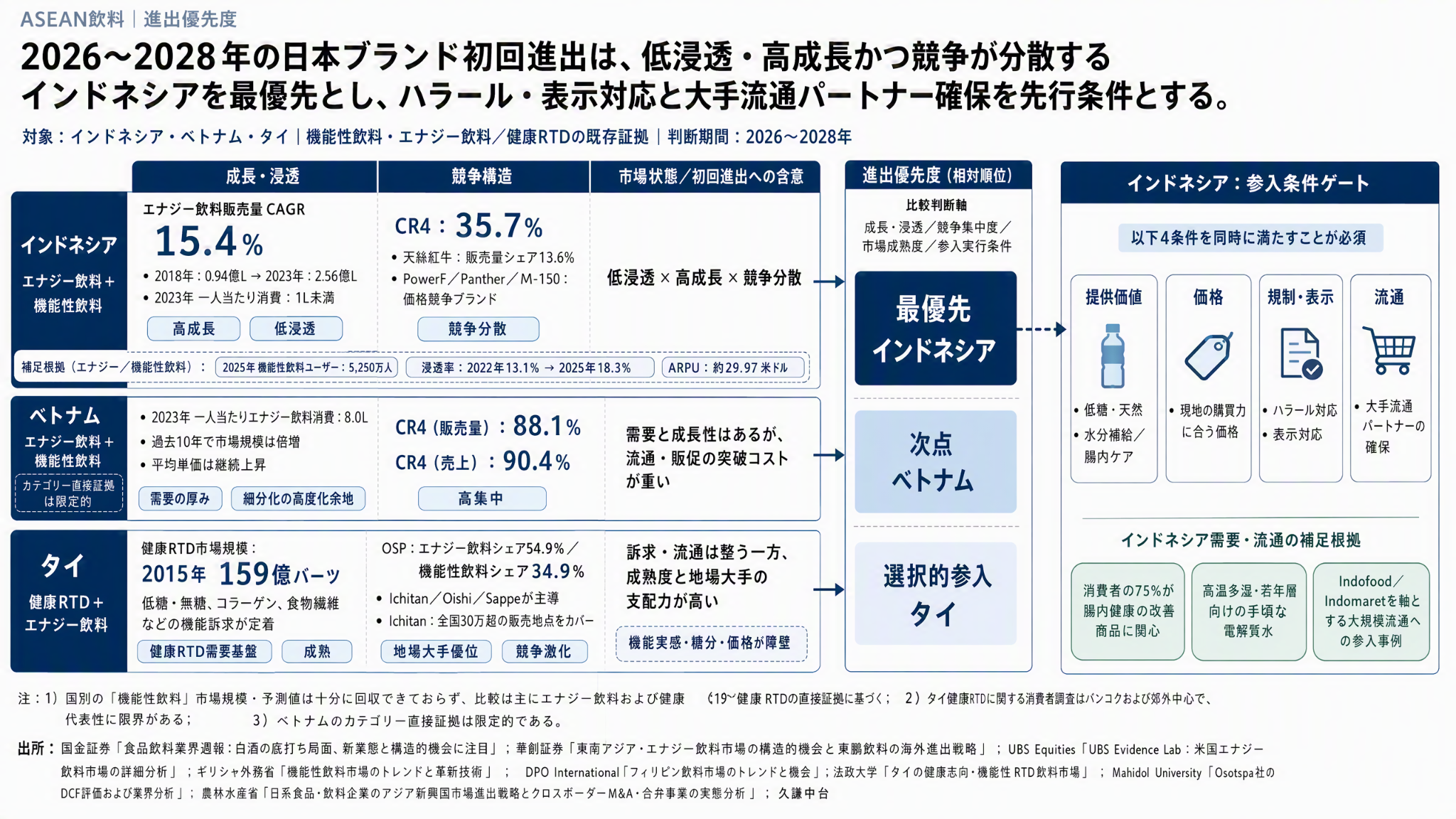
Where are the strongest opportunities for functional drink brands over the next three years?
Indonesia stands out for 2026–28: 15.4% CAGR, consumption below one liter per capita and a 35.7% top-four market share suggest growth, low penetration and fragmented competition. Entry should combine locally affordable pricing, low-sugar or natural ingredients, hydration or gut-health benefits, halal compliance and major distribution partners
Electronics & Automation | Vietnam
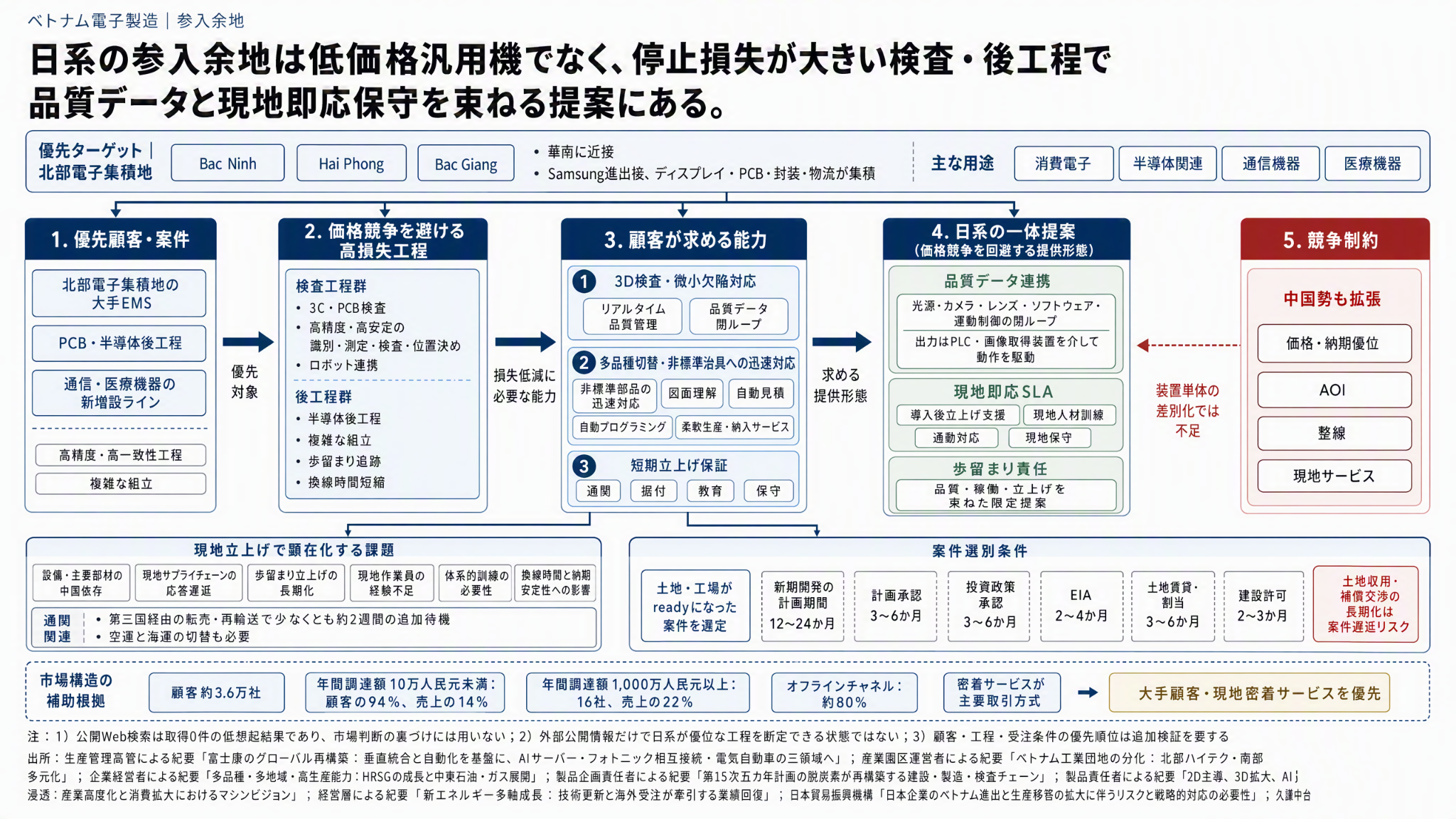
Where can automation suppliers meet unmet needs in Vietnam’s electronics industry?
Opportunities lie in processes where downtime and defects are costly, particularly major EMS operations in northern Vietnam and semiconductor testing and back-end processes. Combining inspection and quality-control technology with responsive local maintenance can differentiate suppliers through better yields and reliable operations
Sunscreen | Thailand
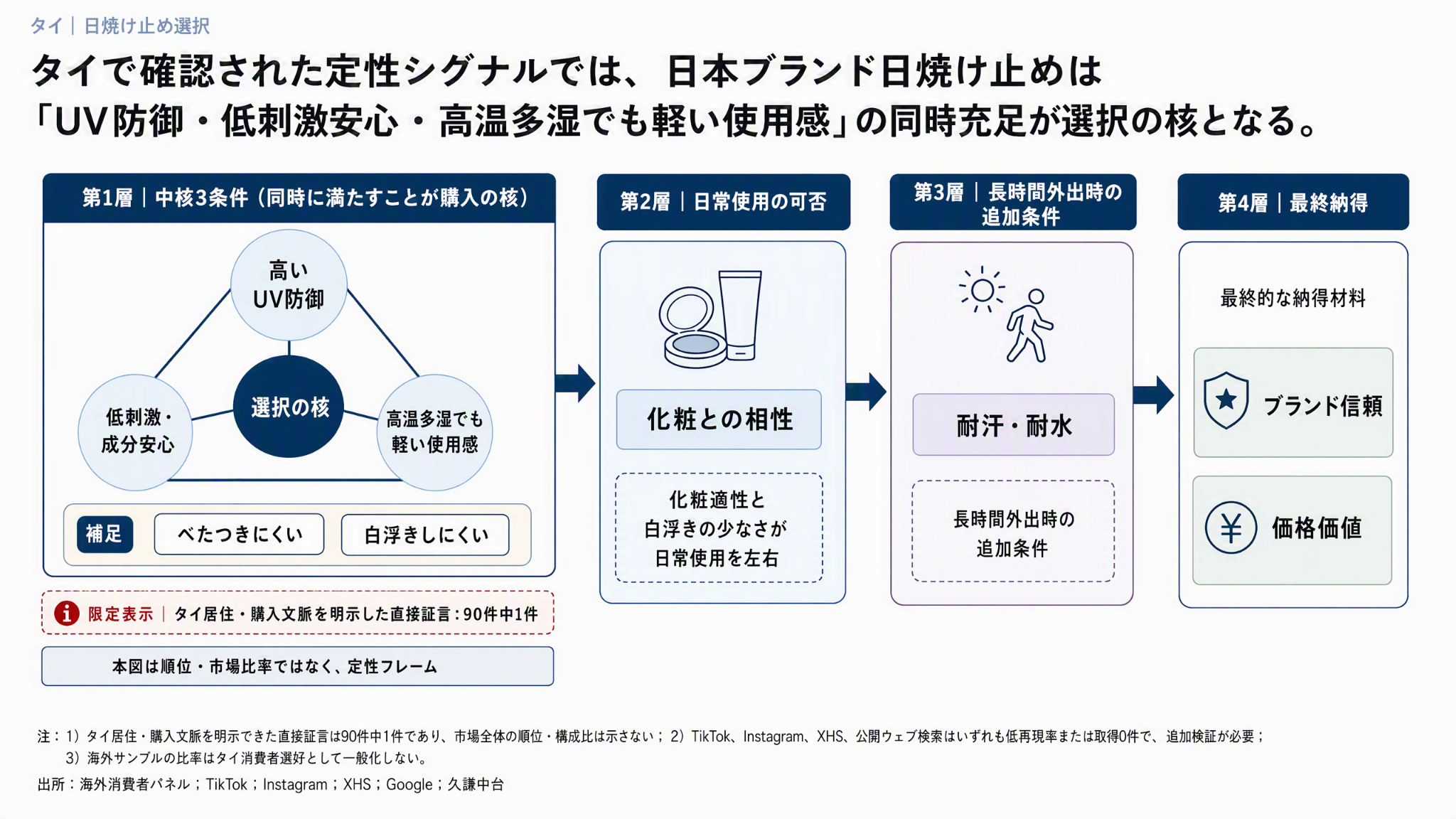
What matters to Thai consumers choosing Japanese sunscreen brands?
Qualitative signals point to three linked priorities: strong UV protection, gentle and reassuring ingredients, and a lightweight finish with minimal white cast in hot, humid weather. Makeup compatibility supports daily use; sweat and water resistance matter outdoors, while brand trust and value help shape the final choice
Wireless Earbuds | Vietnam
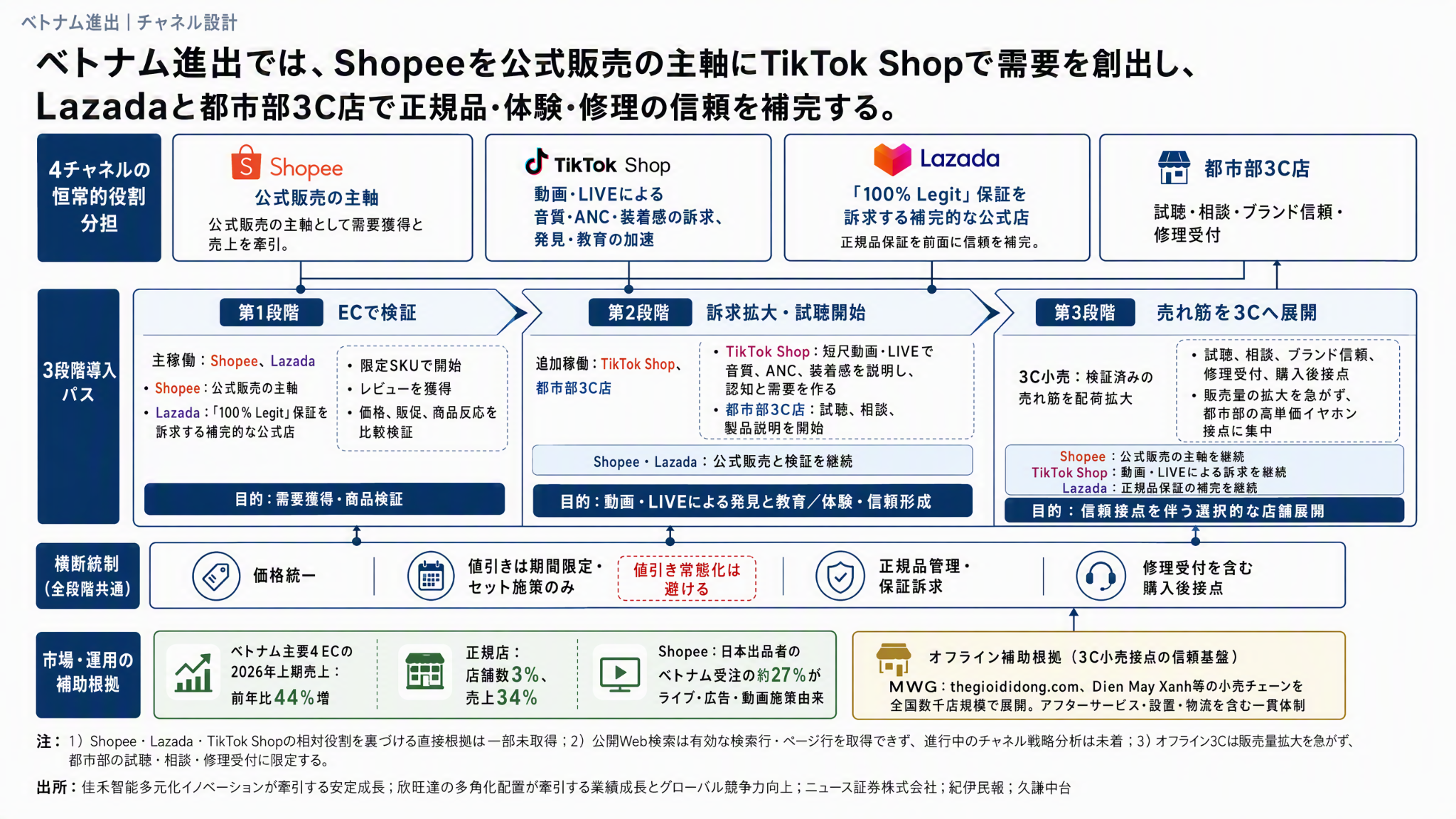
How should Japanese mid-to-premium earbud brands combine sales channels in Vietnam?
Connect online product discovery and purchase with in-store listening and after-sales support. Evaluate platforms such as Shopee and TikTok Shop against target audiences and channel economics, then expand links with physical retail in stages
Auto Parts & EVs | Thailand
How do Thailand's EV policies and localization requirements affect Japanese parts suppliers?
EV policy and local production growth call for a review of supply capabilities and customer mix. Assess opportunities in battery-related components, thermal management and electronics against product-level demand, profitability, applicable standards and automaker qualification requirements
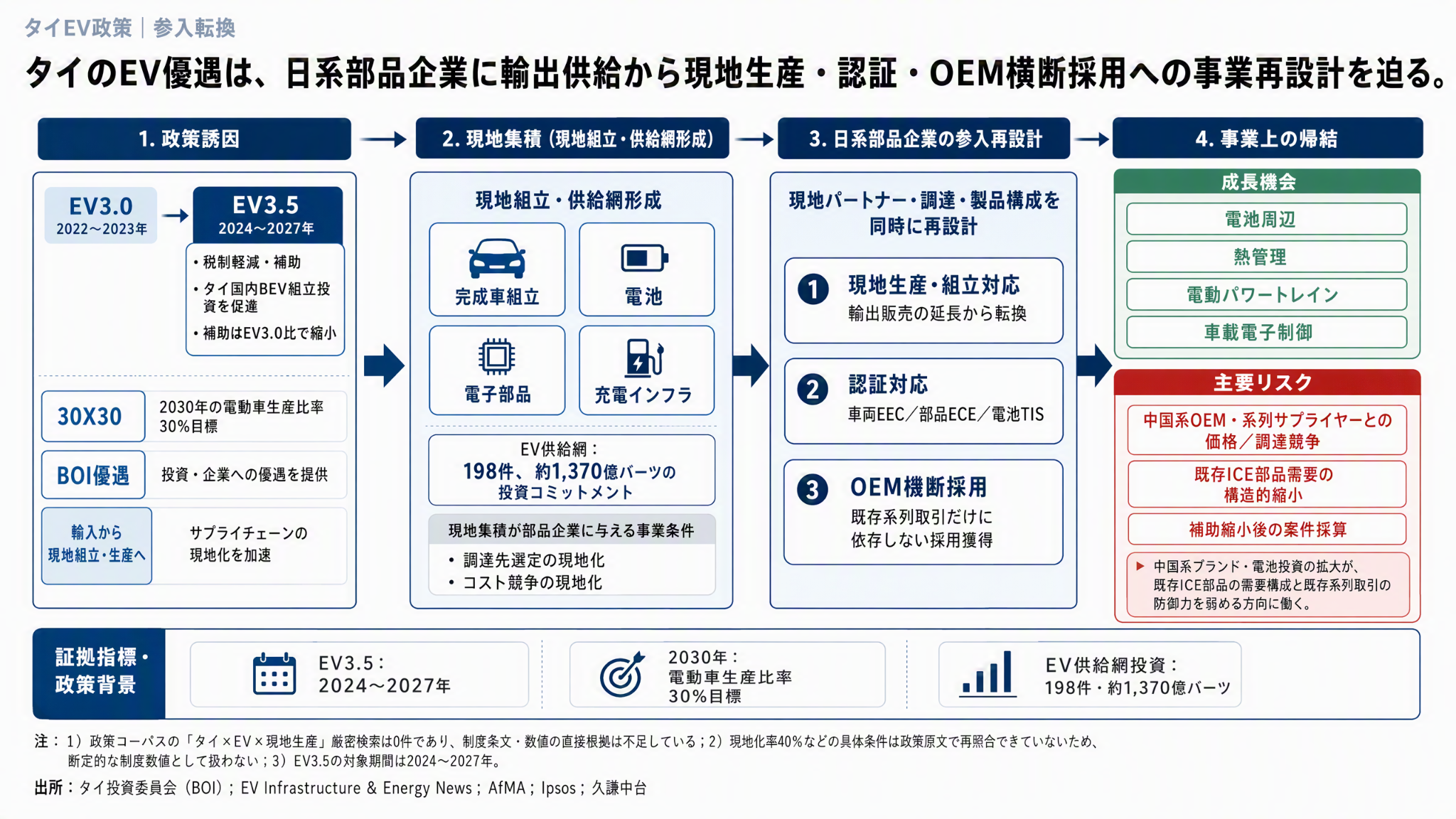
(Note: The examples shown here illustrate research questions, analytical lenses and possible implications for specific markets and industries. Charts, figures and findings are provided to explain the approach; they do not represent market-wide rankings, shares, forecasts or guaranteed business outcomes. Actual decisions require validation against the relevant scope and the latest available information.)
Southeast Asia Reports & Insights
View all insightsArticles in Japanese

彼女経済2026:30代以上の女性の次の消費ニーズは、顔にはない
今回の変化を「30代以上の女性はアンチエイジングをやめて、筋トレを始めた」と単純化すれば、拡散力はあるが正確ではない。アンチエイジングは今もなお良いビジネスだ。




FAQs
Which countries do you cover? Can you research just one market?
We offer cross-country comparisons and detailed single-market research covering Indonesia, Thailand, Vietnam, Singapore, Malaysia, the Philippines and other markets. Country coverage and depth depend on your research objectives and available data
What business challenges can your research address?
We cover country selection, market entry, growth opportunities, competition, consumer needs, product localization, channels, potential partners, policy and entry requirements. The scope starts with the decision you need to make
Can you compare countries and recommend an entry sequence?
We compare market size, growth, competition, profitability, channels and barriers using common criteria. By clarifying opportunities and constraints in each country, we support decisions on market selection, resource allocation and entry sequence
How do you compare countries with different data definitions or coverage?
We check definitions, periods and scope, then compare data where conditions align. Information that cannot be compared directly is identified and explained in local context, so data differences are not mistaken for market differences
Which data sources do you use?
We use official statistics, policy and regulatory documents, industry and company materials, trade and channel data, e-commerce information and public consumer feedback. Consumer studies and expert interviews can be added where the research requires them
Can you include our internal research and business data?
With authorization, we can combine your market materials, business data, channel information and existing research with external evidence to test current assumptions and fill information gaps